
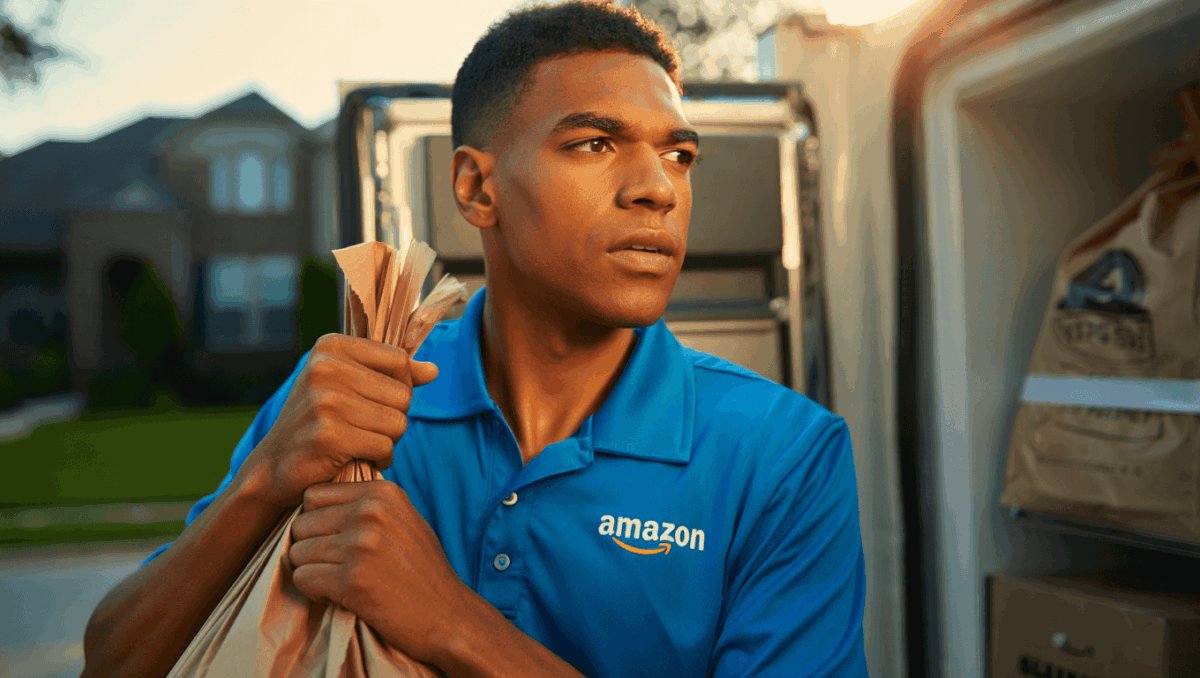
Delivery is getting disrupted as Amazon dramatically expands same-day grocery delivery to over 2,300 cities and towns nationwide, marking an unprecedented acceleration in the e-commerce giant’s fresh food operations. Since August 2025, the company has grown its perishable grocery selection by 30 times, fulfilling its aggressive year-end expansion target. This massive push into grocery delivery is fundamentally reshaping how Americans get their fresh food and intensifying competition with delivery platforms and traditional retailers.
🔥 Quick Facts
- 2,300 cities and towns now have access to Amazon same-day grocery delivery as of December 10, 2025
- 30 times growth in perishable grocery sales since January 2025, driving massive marketplace expansion
- New coverage areas include Salt Lake City, Omaha, Des Moines, Boise, and metro Detroit, among thousands more
- Amazon initially launched perishable same-day delivery in Seattle, Los Angeles, Dallas, Chicago, Miami, and New York City earlier in 2025
Delivery Disruption Reshapes Grocery Marketplace Competition
Intuit emerges as best software stock for 2026 while stock crashes to bargain levels analysts didn’t expect
2026 tax brackets shock Americans with hidden paycheck truth nobody expected
Amazon’s expansion creates immediate disruption across the grocery delivery ecosystem. Instacart and DoorDash shares declined significantly following the announcement, as investors recognize the threat posed by Amazon’s unmatched logistics infrastructure. Traditional grocery chains face new pressure to accelerate their own delivery capabilities or risk losing customers to Amazon’s speed and convenience. The company’s ability to offer same-day perishable delivery across thousands of markets simultaneously demonstrates operational advantages competitors struggle to match.
The expansion strategy targets both major metropolitan areas and secondary markets, recognizing that grocery delivery demand extends far beyond coastal cities. Amazon’s decision to double its network from 1,000 cities in August to 2,300 cities by December signals confidence in scaling perishable logistics at unprecedented speed. Fresh items including produce, meat, seafood, and dairy now move through Amazon’s same-day delivery network alongside pantry staples.
30x Growth Signals Explosive Consumer Demand
Marcus Lemonis takes CEO role at Bed Bath & Beyond with $25M cost-cutting plan and watch what industry experts are saying about his next move
SPX surges 34 points at open with shocking tech recovery, here’s what caused the unexpected Venezuela rally
The 30 times growth in perishable grocery sales since January 2025 reflects fundamental shifts in consumer shopping behavior. Fresh foods have emerged as bestsellers within Amazon’s same-day delivery category, surprising some analysts who expected packaged goods to dominate early stage adoption. This trajectory suggests consumers prioritize speed and convenience when buying perishables, overcoming traditional preferences for shopping produce in person.
Amazon’s success with fresh groceries validates a strategic bet made years ago when the company acquired Whole Foods. Today, that investment pays dividends through integrated logistics, brand credibility for quality produce, and distribution capabilities spanning the continental US. The company uses Prime member data and Amazon Fresh technology to optimize fulfillment center locations and delivery routes, creating efficiency competitors cannot easily replicate.
| Expansion Metric | Details |
| Total Coverage | Over 2,300 US cities and towns |
| Growth Since August 2025 | More than 130% increase in cities |
| Product Selection Growth | 30x increase since January 2025 |
| Key Categories | Produce, meat, seafood, dairy, pantry items |
| Future Plans | Additional expansion planned for 2026 |
Strategic Implications for Industry Challengers
Amazon’s aggressive expansion puts enormous pressure on Instacart, DoorDash, Walmart+, and Target to accelerate their own grocery capabilities. Each competitor must now decide whether to compete directly on speed, differentiate on selection or price, or focus on localized markets Amazon hasn’t yet prioritized. The economics of perishable delivery at scale have historically challenged every company except Amazon, which subsidizes grocery delivery through Prime membership and uses it to drive broader platform engagement.
Retailers increasingly recognize they cannot ignore Amazon’s grocery ambitions. Kroger, Albertsons, Whole Foods competitors, and regional chains must evaluate whether to build independent delivery networks, partner with third parties, or accept reduced market share. Some analysts argue Amazon’s expansion will ultimately benefit consumers through lower prices and faster service, forcing traditional competitors to improve their own offerings or exit the market.
“We’re committed to providing customers with fresh, high-quality groceries delivered same-day, expanding this service to thousands of new communities across the country.”
— Amazon Leadership, Official Announcement
Will Same-Day Grocery Delivery Become the New Standard?
Amazon’s scale and speed suggest same-day grocery delivery may eventually transition from premium service to market expectation. The company’s presence in 2,300 cities creates a new baseline against which consumers measure other delivery options. Shipping times of 24-48 hours suddenly feel slower by comparison, forcing competitors to either match Amazon’s speed or convince customers that other attributes justify longer wait times.
The long-term winner in grocery delivery likely depends on execution excellence. Amazon excels at logistics and bears the cost of aggressive delivery speeds. Instacart and DoorDash have built powerful marketplace networks but rely on restaurant and grocery partner cooperation. Traditional retailers have inventory and locations but lack Amazon’s last-mile infrastructure. As competition intensifies throughout 2026 and beyond, the grocery delivery market will reveal which companies can sustain profitable operations while meeting consumer expectations for speed and selection.
Sources
- About Amazon – Official announcement of same-day grocery delivery expansion to 2,300 cities
- TechCrunch – Analysis of Amazon’s perishable grocery delivery scaling and competitive implications
- Grocery Dive – Coverage of new markets including metro Detroit and mountain region expansion

Patrick Graham is a business and finance journalist translating Wall Street’s complexities into stories that matter to everyday readers. With extensive experience in financial journalism and economic analysis, this expert journalist provides sharp insights on market trends, corporate developments, and the economic forces affecting daily life. His reporting helps readers make sense of the business world’s biggest moves.