
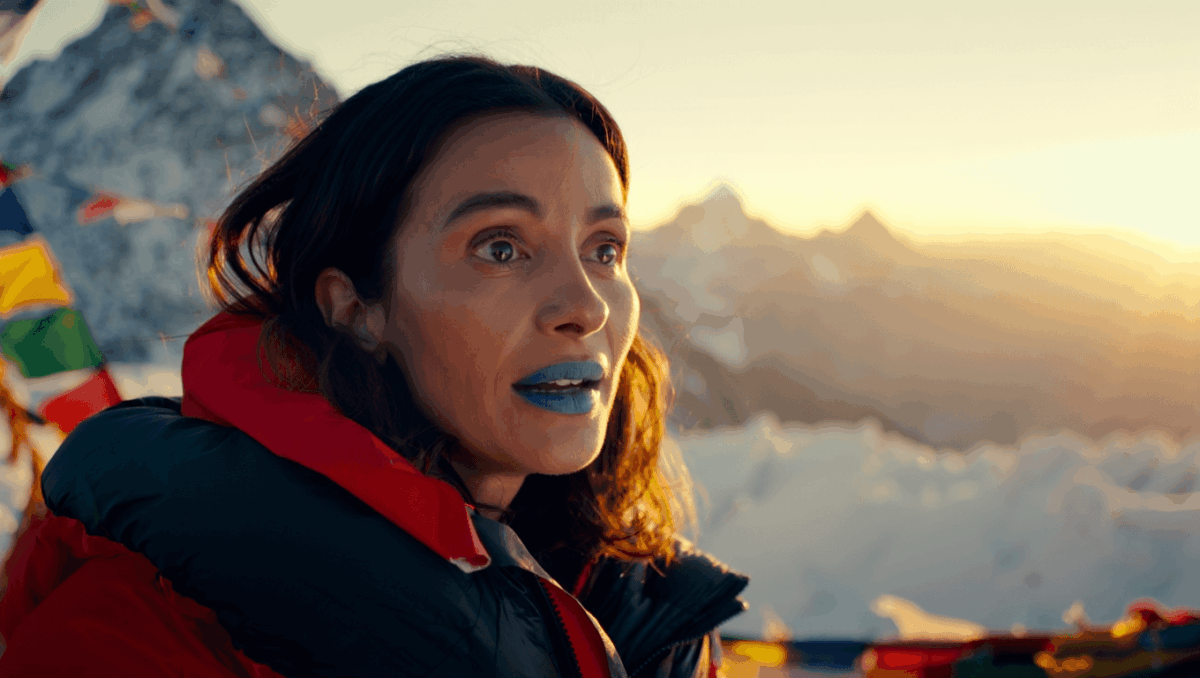
60 Minutes Overtime reveals the extraordinary behind-the-scenes challenges the team faced filming a groundbreaking documentary on Mount Everest. Correspondent Cecilia Vega and her crew of international cinematographers transported 800 pounds of camera gear up one of the world’s most dangerous mountains. Their 10-day journey to Everest Base Camp tested every physical and mental limit.
🔥 Quick Facts
- The 60 Minutes team climbed 50 miles over 10 days to reach Everest Base Camp at 17,598 feet
- Correspondent Cecilia Vega called it “the hardest thing I’ve ever done physically”
- The crew trained for 3 months, with Vega using a rowing machine to improve lung function
- An avalanche from a 5.5-magnitude earthquake forced the team to cut their Base Camp stay short
Training for the Impossible Trek
America’s Next Top Model documentary drops today on Netflix with shocking revelations
Dana Eden dies at 52, Tehran producer found dead in Athens hotel
When producer Jacqueline Williams discovered 19-year-old Nima Rinji Sherpa had become the youngest person to summit all 14 of Earth’s highest mountains, she knew she had found her story. Within minutes of pitching the concept, Vega responded with an enthusiastic “YES!!” The team began preparation in January for their spring expedition.
Vega worked out intensely at Row House in Washington, D.C., focusing on her lungs. Williams trained at Combine Air Altitude Training in Sydney, where nitrogen is pumped into the air to simulate 3,500 meters of elevation. Sound recordist Matthew Magratten climbed Prospect Park stairs in Brooklyn. Photographer Jonathan Partridge worked with a personal trainer, while Drew Levinson hiked Colorado mountains and Andy Taylor trained near Sydney Harbour.
Tommy Lee Jones’ daughter was pregnant before her tragic death, court docs reveal
J Cole announces The Fall-Off world tour, first global dates in decades
Despite months of preparation and intense training, nothing could fully prepare them for what awaited. Vega later reflected that altitude sickness doesn’t discriminate; all the training in the world can’t prevent it from affecting your body.
Conquering the World’s Most Treacherous Trek
The journey began at Lukla Airport, one of the most dangerous airports in the world, carved into a mountainside cliff. The team hiked through Nepal’s remote villages, stopping at tea houses for dal, rice, and momos—traditional Nepalese dumplings.
Safety equipment included warning bells worn by porters carrying nearly twice their body weight. Vega described crossing a suspension bridge 45 stories above a roaring gorge as terrifying, saying “I am not looking down, don’t talk.” By day five at 13,500 feet, exhaustion set in, with Vega admitting on camera, “This is really hard. I don’t care if they catch me on camera taking a break.”
| Trek Detail | Information |
| Total Distance | |
| Elevation Gain | 8,261 feet |
| Final Elevation | 17,598 feet |
| Days of Hiking | 10 days |
| Equipment Weight | 800 pounds |
The Avalanche Terror That Forced Evacuation
Reaching Everest Base Camp meant celebrating a monumental achievement, but the danger was far from over. Vega’s lips turned blue from the extreme altitude. The team barely slept, and confusion set in from oxygen deprivation. Williams explained that at those extreme heights, “you become very discombobulated. It’s hard to think clearly.”
On one terrifying night, disaster nearly struck when a 5.5-magnitude earthquake triggered an avalanche that came dangerously close to the tents. Vega recalled the moment: “It’s pitch black, it’s night, and we hear this loud crash. And it sounds like it’s right outside your tent.” The experience forced them to cut their Base Camp stay short due to multiple avalanches.
“We felt the stress. I heard the avalanche all night.”
— Cecilia Vega, 60 Minutes Correspondent
The Unsung Heroes: Sherpas Who Made It Possible
Vega credited the entire experience to their guide, Nima Rinji Sherpa. The 19-year-old mountaineer carried responsibilities far beyond simple guidance. He led the team through impossible terrain while managing his own climbing challenges and watching over crew members struggling with altitude.
Local porters shouldered the burden of the 800 pounds of filming equipment—lights, cameras, sound gear—while strapped with loads sometimes twice their body weight. Vega highlighted their sacrifice: “Not only do they carry all of our gear, they are walking with you, they are laughing with you, they are showing you their country, their mountain.” She noted that Sherpas account for one in three deaths on Everest, yet receive far less recognition than Western mountaineers.
Watch: The Behind-the-Scenes Documentary
Will the 60 Minutes Everest Special Change Documentary Filming Forever?
The two-part special aired on 60 Minutes on December 21, 2025 at 7:30 P.M. EST and 7 P.M. PST on CBS Television and available on Paramount+. The broadcast represents a watershed moment in documentary journalism, proving that telling authentic stories about Sherpa guides and their extraordinary sacrifices can capture mainstream television audiences.
Vega reflected on the entire experience as transformative: “The view is humbling, it is satisfying. You are awestruck that you did that. You are thankful that you survived. It is one of the most amazing and challenging things I have done and probably will ever do.” The 60 Minutes Overtime special provides viewers with rare behind-the-scenes access to the human cost of capturing world-class television in extreme conditions.
Sources
- CBS News – Behind-the-scenes interviews with Cecilia Vega and production team
- Outside Magazine – Exclusive 60 Minutes Everest expedition coverage
- 60 Minutes Overtime – Documentary special featuring production details

Jessica Morrison is a seasoned entertainment writer with over a decade of experience covering television, film, and pop culture. After earning a degree in journalism from New York University, she worked as a freelance writer for various entertainment magazines before joining red94.net. Her expertise lies in analyzing television series, from groundbreaking dramas to light-hearted comedies, and she often provides in-depth reviews and industry insights. Outside of writing, Jessica is an avid film buff and enjoys discovering new indie movies at local festivals.