
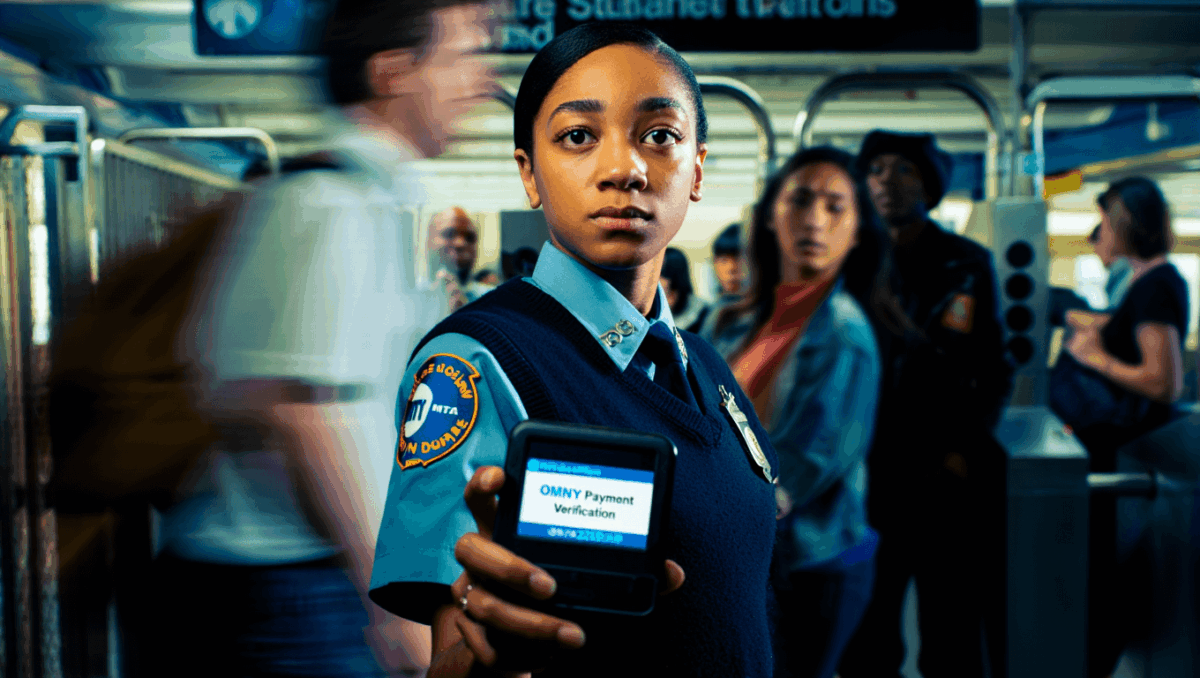
The MTA is taking aim at a $918 million crisis by deploying high-tech fare enforcement agents armed with handheld ticketing devices across New York City. The agency announced Wednesday that unarmed fare agents with small computers will soon catch fare evaders and issue tickets instantly once the OMNY system fully launches in 2026.
🔥 Quick Facts
- $918 million lost to fare evasion in 2024, according to Citizens Budget Commission study
- 330 subway riders jumped turnstiles every minute last year, representing 174 million stolen fares
- European-style enforcement model will deploy civilian agents, not police, to check payment
- OMNY deployment planned for 2026 with handheld technology to verify payment and issue fines
The $918M Fare Evasion Crisis Threatening NYC Transit
Intuit emerges as best software stock for 2026 while stock crashes to bargain levels analysts didn’t expect
2026 tax brackets shock Americans with hidden paycheck truth nobody expected
Fare evasion in New York City has reached catastrophic levels. The $918 million lost in 2024 represents a tripling of losses from just $305 million in 2019, before the pandemic disrupted commuting patterns. This staggering sum equals enough revenue to fund 180 new subway cars, 630 new buses, or 36 miles of new train signals.
The crisis threatens the legitimacy of the entire transit system. According to Andrew Rein of the Citizens Budget Commission, riders paying fares increasingly question why others bypass payment without consequence. Bus fare evasion alone cost $568 million in 2024, while subway fare jumping accounted for $350 million in losses.
Handheld Technology Puts Ticketing in Agents’ Hands
Marcus Lemonis takes CEO role at Bed Bath & Beyond with $25M cost-cutting plan and watch what industry experts are saying about his next move
SPX surges 34 points at open with shocking tech recovery, here’s what caused the unexpected Venezuela rally
MTA Chairman Janno Lieber announced the game-changing technology Wednesday. Fare agents will carry handheld devices capable of checking OMNY cards, credit cards, and mobile payments to verify if passengers actually paid their fares. The machines instantly print tickets and fines on the spot, eliminating delays and making consequences immediate.
“When people get fines and face the reality that there are consequences, it changes behavior,” Lieber explained. The agency is also experimenting with four or five different turnstile models designed to prevent fare jumping through improved physical barriers. Some new fare gates have 15-second door delays to reduce opportunities for fare evasion.
European Model Proves Successful Against Transit Crime
| Strategy Component | Details |
| Enforcement Model | Civilian fare agents, not police officers |
| Technology | Handheld devices verify OMNY cards and payment |
| Implementation Timeline | Launch in 2026 with full OMNY system |
| International Precedent | Paris and other European cities deploy similar systems |
| Current Evasion Rate | 44% on buses, 330 turnstile jumpers per minute |
The MTA is modeling its approach after Paris and other major European cities, where enforcement agents routinely stop passengers and verify payment on-the-spot. Rein recounted a friend’s experience in Paris: “She didn’t understand the system and was stopped mid-station because she inadvertently didn’t pay, and paid a fine right there.” That immediate accountability transforms rider behavior across entire transit networks.
NYC Residents React to High-Tech Crackdown
New Yorkers express mixed reactions to the enforcement initiative. Some support consequences for fare evaders. “I love it because people have to pay the price,” one rider stated. Others voiced concerns about constant surveillance and enforcement presence in stations.
The skeptics note that New Yorkers historically find workarounds to avoid enforcement. “New Yorkers? You know how they are. They will always have a way,” one commuter remarked. Some question whether additional enforcement is necessary, suggesting that one dedicated person watching constantly might deliver better results than rotating agents throughout stations.
Will the MTA’s Tech Arsenal Transform Fare Evasion in 2026?
The real test comes when the OMNY system fully launches in 2026 and handheld technology reaches every subway station and bus. MTA leadership believes consequences drive behavior change, but implementation challenges plague the agency. The OMNY system has experienced delays and bugs throughout its rollout, raising questions about whether the 2026 deployment will proceed on schedule.
For now, the existing EAGLE teams on buses expanded in 2024 remain the primary enforcement mechanism. If the new technology succeeds, it could recover hundreds of millions in annual revenue and restore fairness to a transit system where nearly half of bus riders skip payment.
Featured Video: MTA’s New Fare Enforcement Strategy
Sources
- CBS News New York – MTA’s high-tech fare evasion technology announcement
- Citizens Budget Commission – 2024 fare and toll evasion study and analysis
- New York Times – NYC’s subway and bus fare evasion crisis coverage

Patrick Graham is a business and finance journalist translating Wall Street’s complexities into stories that matter to everyday readers. With extensive experience in financial journalism and economic analysis, this expert journalist provides sharp insights on market trends, corporate developments, and the economic forces affecting daily life. His reporting helps readers make sense of the business world’s biggest moves.