
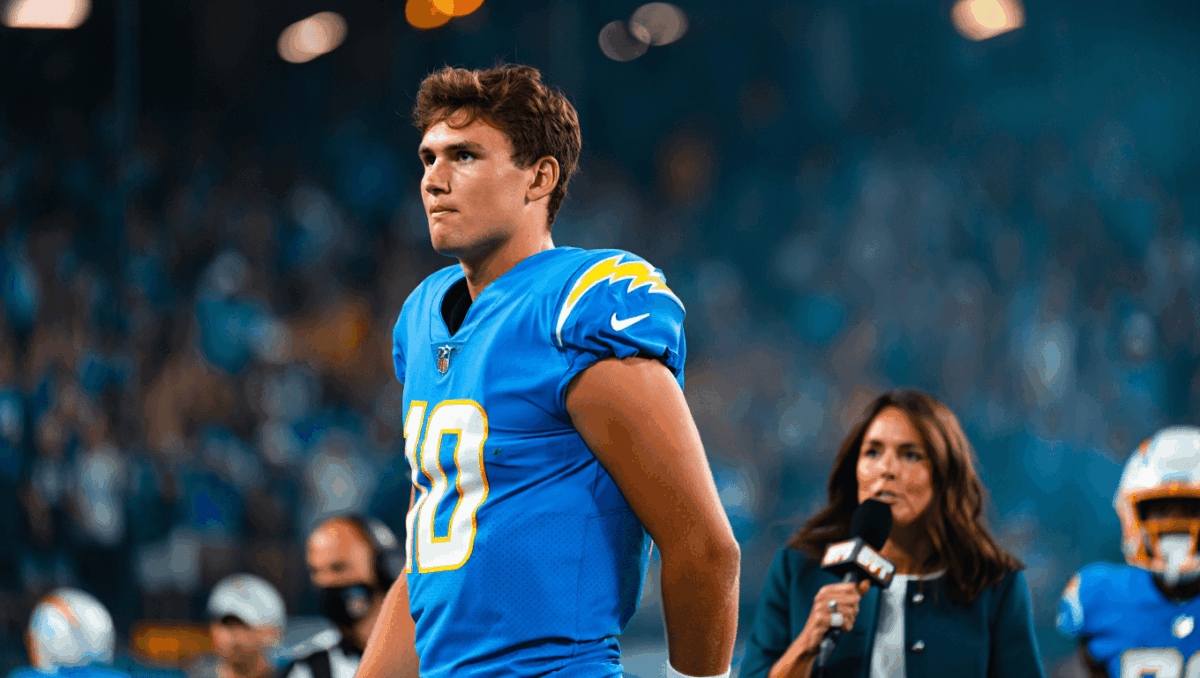
Justin Herbert is dealing with backlash after his awkward postgame moment with ESPN sideline reporter Laura Rutledge following the Chargers’ dramatic 22-19 overtime victory over the Eagles on Monday night. The quarterback’s attempt to walk away from the interview sparked criticism across social media, but his explanation reveals more context than the viral moment shows.
🔥 Quick Facts
- Herbert said he was “just trying to celebrate with my team” when walking away from the interview
- The 27-year-old quarterback played just 1 week after having hand surgery
- He led the Chargers to a thrilling OT win with a 54-yard field goal by Cameron Dicker and Tony Jefferson’s crucial interception
- Coach Jim Harbaugh called Herbert a “superhero” and “competitive maniac” for his grit
The Viral Moment That Sparked the Controversy
Cagliari faces Lecce tonight in Serie A showdown, Rossoblu seek top-half push
Girona faces Barcelona tonight in La Liga showdown, Barcelona chases lead
The scene unfolded on national television as Laura Rutledge attempted to secure a postgame interview with Herbert right after the Chargers secured their dramatic overtime win. Instead of stopping, the quarterback kept walking and told the reporter why he couldn’t stay.
Herbert said: “I’m just trying to celebrate with my team.” He gently pushed past Rutledge as she tried to keep pace with him on the sideline. The reporter persisted, asking if they could talk, showing clear frustration as Herbert continued toward the locker room instead of fulfilling the standard NFL postgame media obligation.
Media Personalities Slam Herbert’s Behavior on Live Television
East Texas A&M faces Southeastern in Family Fun Day matchup today
Macclesfield faces Brentford tonight in FA Cup fourth-round showdown
The awkward exchange quickly went viral, with broadcasters and analysts calling Herbert out for what they described as rudeness and unprofessionalism. Fox7 Austin anchor Alec Nolan posted on social media: “I’m sorry I thought Justin Herbert was extremely rude to ESPN’s Laura Rutledge. You know the drill dude, you’re the QB.”
Commentator Kayce Smith highlighted Herbert’s $262 million contract and the expectations that come with it. Others argued the interview is part of his job under the NFL’s collective bargaining agreement. The criticism dominated social media feeds and sports talk radio throughout Tuesday morning.
What Context the Critics May Have Missed About His Physical Condition
| Factor | Details |
| Injury Status | Hand fracture requiring surgical procedure |
| Recovery Timeline | Surgery occurred approximately 1 week prior |
| Team Performance | Chargers record improved to 9-4 after OT win |
| Game Significance | Dramatic overtime victory against playoff team |
What many critics didn’t emphasize was the remarkable physical toll Herbert endured just to play in this game. The quarterback had undergone a medical procedure for a hand fracture less than 7 days before lining up against the defending champion Eagles.
Jim Harbaugh acknowledged the severity when he brought up Herbert’s recent surgery. “He had a surgery a week ago and out here tonight,” the coach said during his postgame remarks. The context adds considerable weight to understanding why a player might want to immediately get to the locker room rather than stop for an emotional postgame interview.
Coach Harbaugh’s Glowing Assessment Suggests Different Narrative
Harbaugh didn’t criticize Herbert’s postgame behavior at all. Instead, the coach praised his quarterback as a “superhero” and described the entire experience as surreal. “It felt like we were in a movie,” Harbaugh told reporters. “It’s like you get to the point where you go, ‘OK, this is getting a little unrealistic.'”
The head coach also called Herbert a “competitive maniac” for his willingness to play through significant pain just one week after surgery. This assessment from the person who knows Herbert best and sees his work ethic daily offers considerable perspective that some media critics overlooked.
Did His Explanation Justify Walking Away From The Interview Obligation?
The central question remains whether Herbert’s desire to celebrate with teammates after a dramatic overtime win justifies declining a mandatory postgame interview. ESPN’s Laura Rutledge was simply doing her job as a sideline reporter obligated to secure player comments.
However, the full context—playing one week after surgery, leading a dramatic overtime comeback, and the natural impulse to seek out teammates immediately after victory—suggests Herbert wasn’t acting maliciously. Whether that excuses his behavior depends on where each person draws the line between professional obligation and human emotion in an extraordinary moment.