
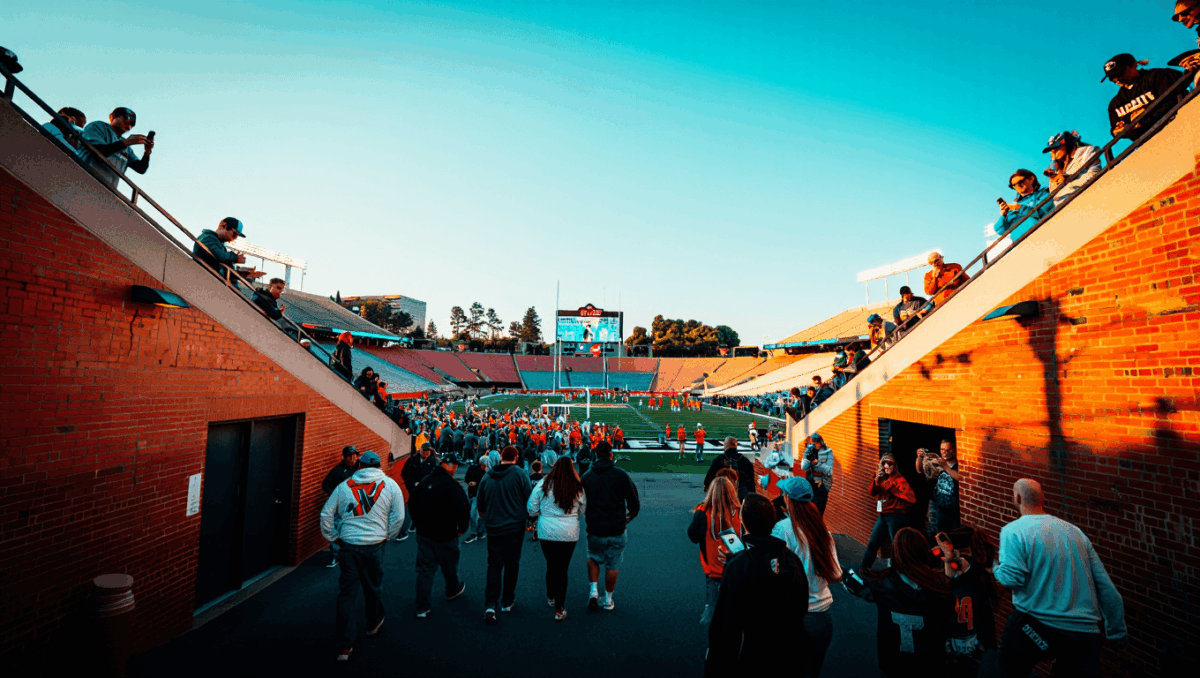
Where is the Rose Bowl played? The historic Rose Bowl Stadium in Pasadena, California, located just northeast of Los Angeles, will host today’s College Football Playoff quarterfinal game between No. 1 Indiana and No. 9 Alabama at 4 p.m. ET (1 p.m. PT). This iconic venue has become synonymous with New Year’s Day college football since 1923, holding deep significance in both the history of American sports and California culture.
🔥 Quick Facts
- Located at 1001 Rose Bowl Drive in Pasadena, California, a northeast suburb of Los Angeles
- Opened in October 1922 with an original seating capacity of 57,000
- Current capacity stands at 90,888 for college football games
- Recognized as a National Historic Landmark and California Historic Civil Engineering landmark
The Iconic Pasadena Location and Historic Setting
Cagliari faces Lecce tonight in Serie A showdown, Rossoblu seek top-half push
Girona faces Barcelona tonight in La Liga showdown, Barcelona chases lead
The Rose Bowl Stadium stands in the Arroyo Seco, a scenic ravine of parkland and natural vegetation on the west side of Pasadena. The location was strategically chosen to provide the perfect backdrop for college football’s oldest bowl game, nestled in the golden foothills of Southern California. This northeast Los Angeles suburb offers accessibility while maintaining the venue’s distinguished character.
The stadium’s design, created by renowned architect Myron Hunt in 1921, drew inspiration from classical Greek and Roman amphitheaters, as well as the Yale Bowl. The horseshoe-shaped original structure was completed in 1922 and first dedicated as “The Rose Bowl” in 1923 when USC defeated Penn State 14-2 in the inaugural game at the venue.
A Century of Expansion and Modern Improvements
East Texas A&M faces Southeastern in Family Fun Day matchup today
Macclesfield faces Brentford tonight in FA Cup fourth-round showdown
From its modest beginning with 57,000 seats, the Rose Bowl Stadium has undergone continuous expansion and renovation. In 1928, the Tournament of Roses enclosed the south end, adding 19,000 seats and bringing capacity to 76,000. Subsequent expansions throughout the 1930s, 1940s, and 1950s increased the stadium’s size dramatically.
By 1972, permanent seats were installed in the north and south ends, increasing capacity to 104,594 and creating an era of massive attendance records. The stadium reached its peak capacity of 106,869 in 1973 during a game between USC and Ohio State. In recent decades, more aggressive modernization has resulted in the current all-seated capacity of 90,888, prioritizing fan comfort and safety with modern amenities and improved sightlines.
| Stadium Feature | Detail |
| Current Capacity | 90,888 (all-seated) |
| Playing Field | 79,156 square feet of bluegrass |
| Rim Circumference | 2,430 feet |
| Year Built | 1922 (opened October 1922) |
| Historic Designation | National Historic Landmark & California Historic Civil Engineering landmark |
Championship History and Major Events Hosted
The Rose Bowl Stadium’s legacy extends far beyond college football. The venue has hosted five Super Bowl games in 1977, 1980, 1983, 1987, and has served as the stage for Olympic soccer matches in 1984. The stadium made history in 1994 when it hosted the FIFA Men’s World Cup Championship, drawing unprecedented attendance of 715,826 across all matches, with the championship final between Brazil and Italy attracting over 94,000 spectators.
The venue also hosted the 1999 Women’s World Cup Final, where the U.S. women’s team defeated China in a penalty shootout before 90,185 fans—a record for women’s sports attendance. Additionally, the Rose Bowl has served as the home of the UCLA Bruins football team since 1982 and continues to host concerts from world-class artists, making it America’s most versatile sports and entertainment venue.
“A National Historic Landmark built in 1922 and known for the New Year’s Tournament of Roses Football Game, the Rose Bowl Stadium has also earned its World-Class Reputation by hosting five NFL Super Bowl Games, the 1984 Olympic Soccer Matches, the 1994 Men’s World Cup, the 1999 Women’s World Cup, and the inaugural 2015 College Football Playoff Semi-final game.”
— Rose Bowl Stadium Official Records, Historical Documentation
Why Does the Rose Bowl Game Matter Today?
Today’s College Football Playoff quarterfinal between Indiana and Alabama continues a tradition dating back over 100 years. The game marks the 112th playing of this historic matchup and represents the modern evolution of college football’s most storied rivalry stage. Indiana arrives undefeated at 13-0 as the No. 1 seed, while Alabama enters as a 9-seed with an 11-3 record, setting up a compelling narrative for playoff success.
The Rose Bowl Stadium’s location in Pasadena continues to draw massive crowds and television audiences worldwide. With over 90,000 fans expected to fill the historic venue and millions watching on ESPN, the game exemplifies why this facility remains “America’s Stadium”—a place where college football dreams come true and history is made on one of sports’ grandest stages.
Sources
- Rose Bowl Stadium – Official historical records and stadium specifications
- ESPN – College Football Playoff 2026 scheduling and coverage
- Wikipedia – Rose Bowl Stadium historical timeline and facts

Michael Brown is a seasoned sports journalist bringing years of experience covering professional athletics and sporting culture. With a keen eye for breaking stories and player dynamics, this veteran journalist delivers in-depth analysis and exclusive insights from the world’s biggest sporting events. His passion for the game shines through in every story, keeping fans connected to the action both on and off the field.