
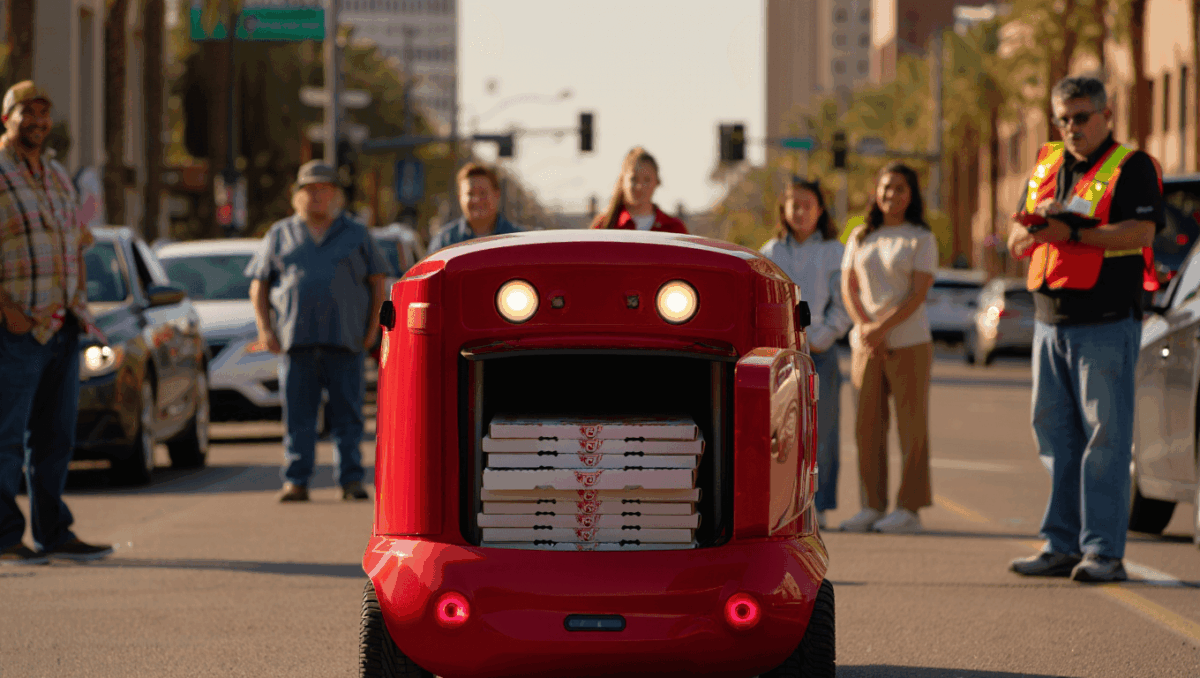
Delivery is getting a robot-and-drone boost this year. DoorDash rolled out Dot while Amazon shifts Prime Air strategy. Read on for verified facts and what changes next.
🔥 Quick Facts
- DoorDash unveiled Dot on September 30, 2025, per TechCrunch.
- Dot weighs about 350 pounds, carries up to 30 lb, and reaches 20 mph.
- Dot is testing in Phoenix with wider rollout planned by end of 2025, DoorDash says.
- Amazon has resumed and expanded Prime Air operations in 2025, adjusting city rollouts and safety protocols.
Delivery gets a robot boost with Dot
TurboTax Expert Full Service opens January 5, 2026, and what new tax law changes mean for your refund will surprise you
Intel stock soars 4% at open with analyst predicting $50 target, here’s why Panther Lake launch today changes everything
DoorDash built Dot to change how last-mile delivery works in cities and suburbs.
Dot operates on roads, bike lanes, and sidewalks with sensors, lidar, and radar arrays. The vehicle targets orders that fit its 30 lb cargo capacity and aims to preserve food quality.
Samsung Galaxy S26 Ultra drops at $1,299 but kept one jaw-dropping feature completely secret until February 25
CES 2026 unveils $99 AI memory wearable and smart glasses that finally look normal, but Samsung’s 6K 3D display will blow your mind
DoorDash frames robotics as a way to scale local commerce while keeping human dashers on higher-value tasks. The company calls this an augmentation strategy, not a full replacement.
How Dot and drones change delivery economics
Dot reduces per-trip vehicle costs by using electric power and shared charging infrastructure. That can cut labor and fuel expenses on short deliveries.
Amazon and other firms push drones for speed over short distances, while robots target denser urban routes. Together, robots and drones shift unit economics and service expectations.
Investors and merchants watch unit costs, uptime, and regulation before wider adoption. Regulatory clarity remains a key variable for scaling delivery automation.
Specs and rollout details: what we can confirm
Verified technical and rollout facts come from company releases and reporting by TechCrunch and Bloomberg.
| Specification | Details |
| Weight | Approximately 350 pounds (reported by TechCrunch) |
| Top speed | Up to 20 mph (company statement) |
| Cargo capacity | Up to 30 lb or six pizza boxes (reported) |
| Battery life | Reported test range 6–8 hours in field trials; Restaurant Dive reported this range |
| Processor / compute | Not yet disclosed by DoorDash |
Regulation, safety and worker impact
City officials and regulators have engaged with DoorDash about small-vehicle delivery, according to reporting. Local rules will shape where Dot can operate.
DoorDash says Dot is designed to be deferential to pedestrians and cyclists and to pull over when needed. The company also uses field operators and charging hubs to support fleet reliability.
Human drivers remain central to DoorDash operations, and the company frames automation as a complement to human dashers. Labor groups and cities continue to debate the pace and scope of automation.
What happens next for delivery robots and drones?
The next 12 months will test whether robots like Dot scale beyond pilot cities. Regulators, merchants, and consumers will decide adoption speed.
Amazon’s Prime Air expansion suggests a hybrid future where drones and ground robots serve different delivery niches. Industry watchers expect targeted rollouts, not instant national coverage.
Will Dot and Prime Air change fast food and grocery delivery nationwide?
“the first and last ten feet,”
— Stanley Tang, DoorDash co-founder
Watch the demo:

Sources below include company announcements and major reporting that confirm the facts above. Read their full pieces for deeper technical and regulatory detail.
Sources
- TechCrunch – coverage of Dot’s unveiling and technical details.
- DoorDash (official blog) – company announcement and rollout plans.
- CNBC – reporting on Amazon Prime Air operations and 2025 adjustments.

Lee Ann Anderson is a technology journalist specializing in consumer tech, digital innovation, and Silicon Valley trends. With a talent for breaking down complex technical concepts into accessible insights, this skilled journalist keeps readers informed about the gadgets, apps, and breakthroughs shaping our digital future. Her coverage bridges the gap between tech enthusiasts and everyday users.