
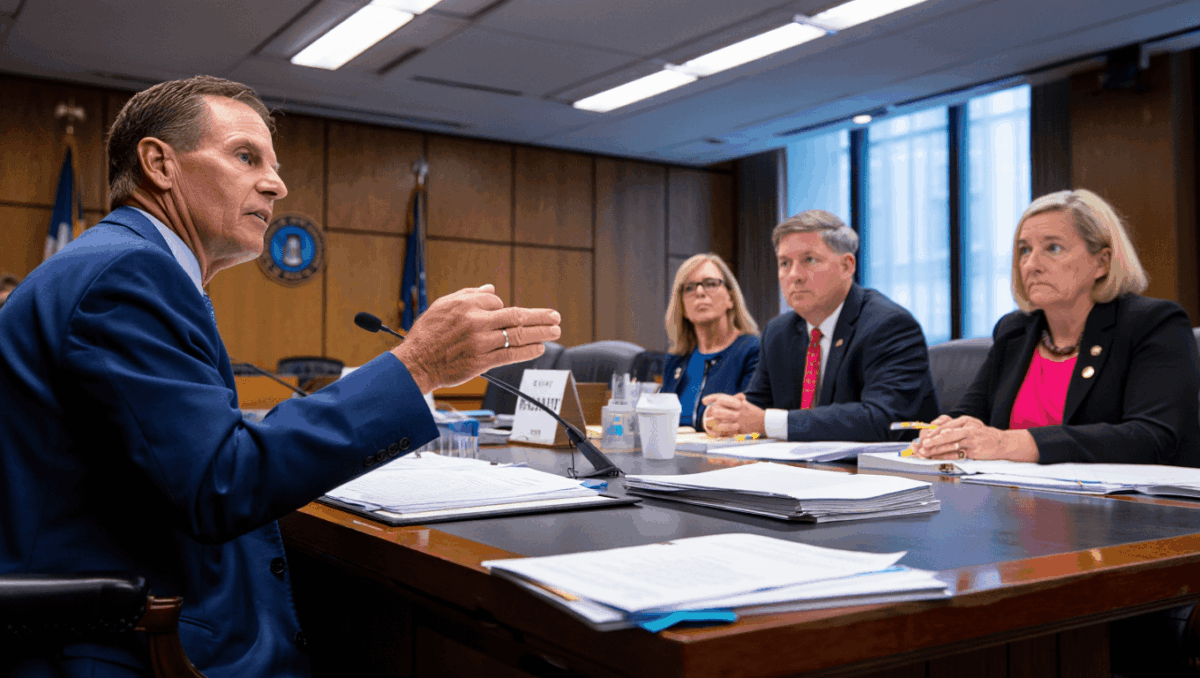
Alabama Power announced it will freeze residential electricity rates through 2027, a move the Alabama Public Service Commission approved on December 2, 2025. The rate freeze came as critics continue blasting that Alabama households pay the third-highest residential electric bills in the nation, averaging $173 per month according to federal data from the U.S. Energy Information Administration.
🔥 Quick Facts
- Alabama ranks third in the nation for highest average monthly residential electric bills at $173/month
- The rate freeze applies to 2026 and 2027, approved by the PSC on December 2, 2025
- Alabama Power serves 1.5 million customers in the southern two-thirds of the state
- U.S. Senator Katie Britt expressed concern that Alabama has the highest power rates in the Southeast
What the Rate Freeze Means for Customers
Intuit emerges as best software stock for 2026 while stock crashes to bargain levels analysts didn’t expect
2026 tax brackets shock Americans with hidden paycheck truth nobody expected
Alabama Power claims the two-year freeze will provide stability during uncertain economic times. The company emphasized that rate stabilization is a significant achievement when comparing Alabama to national trends of utility rate increases across the country.
Brian George, assistant treasurer for Alabama Power, stated that the company started with a goal of freezing rates for 2026 and extended it through 2027 after discussions with PSC staff. However, the company warned that individual bills could still fluctuate based on monthly electricity usage.
Marcus Lemonis takes CEO role at Bed Bath & Beyond with $25M cost-cutting plan and watch what industry experts are saying about his next move
SPX surges 34 points at open with shocking tech recovery, here’s what caused the unexpected Venezuela rally
Environmental and consumer advocacy groups questioned whether the freeze would truly benefit customers long-term. Christina Tidwell, senior attorney for the Southern Environmental Law Center, said the freeze “locks in the status quo” without addressing underlying affordability issues.
Why Alabama’s Bills Are Third-Highest in the Nation
Alabama consumes approximately 30% more electricity than the national average, particularly due to intense summer heat requiring extensive air conditioning usage. The state’s hot climate and reliance on electric heating drive consumption higher than most states.
Despite consuming more electricity than most states, Alabama has the third-highest monthly residential bills, suggesting rates themselves contribute significantly to the burden. Alabama Power’s residential rate stands at 16.43 cents per kilowatt-hour, higher than neighboring states but below the national average of 18.07 cents/kWh.
| State/Utility Metric | Rate or Amount |
| Alabama National Ranking | 3rd Highest Monthly Bills |
| Average Monthly Bill (Alabama) | $173 |
| Alabama Power Residential Rate | 16.43¢/kWh |
| U.S. National Average Rate | 18.07¢/kWh |
| Rate Freeze Period | 2026-2027 |
Critics Question Long-Term Solution
Daniel Tait, president of Energy Alabama, criticized the freeze as political theater rather than genuine rate relief. He argued the rate freeze does not change Alabama Power’s profit margins, which remain guaranteed under the state’s Rate Stabilization and Equalization (RSE) system adopted in the 1980s.
Advocates have called for a return to traditional rate cases that require utilities to open their books for public scrutiny. Tait noted that Alabama hasn’t had a full rate case since 1982, unlike most other states that require formal proceedings when utilities seek rate increases.
Ari Peskoe, Director of the Electricity Law Initiative at Harvard Law School, emphasized the consumer protection value of rate cases: “absolutely, there could be billions of dollars at stake. It’s worth the time and money. We don’t just trust a monopolist who provides these essential services for profit.”
The PSC Structure Favors Utilities, Experts Say
The Public Service Commission uses formula-based rate adjustments rather than competitive rate cases. Credit rating agency S&P Global ranked Alabama’s PSC as “above average” for investor-friendliness, meaning utilities receive higher returns than the national average of approximately 9% return on equity.
Alabama Power has been one of the state’s most politically influential companies, contributing nearly $5 million to political action committees since 2013. The company’s PAC has distributed more than $3.3 million directly to political candidates, with Governor Kay Ivey receiving over $300,000 from the utility since she served as lieutenant governor.
What Happens After 2027 When the Freeze Ends?
The rate freeze provides only temporary stability, leaving critical questions about electricity costs beyond 2027. Alabama Power had originally requested approval for a $3.32 per month increase starting mid-2027, suggesting significant rate increases could follow the freeze period.
Consumer advocates argue that a meaningful solution requires Alabama to abandon the formula rate system and return to transparent rate cases. The new PSC president, Cynthia Almond, acknowledged the importance of power rates to low-income Alabamians but said she wasn’t equipped to discuss changing the regulatory framework during her recent appointment.
Sources
- AL.com – Coverage of December 11 PSC hearing with critical analysis of rate freeze
- WBRC News – Investigative report on Alabama’s third-highest electric bills and PSC structure
- U.S. Energy Information Administration – Official electricity rate data and consumption statistics

Patrick Graham is a business and finance journalist translating Wall Street’s complexities into stories that matter to everyday readers. With extensive experience in financial journalism and economic analysis, this expert journalist provides sharp insights on market trends, corporate developments, and the economic forces affecting daily life. His reporting helps readers make sense of the business world’s biggest moves.